
Finance Minister Arun Jaitley's decision to cut arbitrage may ensure that the standards of purity of the refined gold in the Indian market meet the global benchmark

Gold prices surged by Rs 650 to Rs 31,200 per ten gram on heavy purchases by stockists and retailers for the marriage season and approaching 'Diwali' festival.

Gold prices hit one-month lows at the bullion market on Wednesday on sustained selling from stockists and investors in the backdrop of a crash in global market, while silver hit two-and-a-half-year low.

Despite the recent imposition of import rule and high duties, the yellow metal continues to attract buyers.
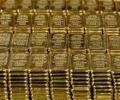
Globally, gold rose 0.83 per cent to $1,290.90 an ounce and silver was up 0.79 per cent to, $17.92 an ounce in London in early trade on Tuesday.

Gold advanced one per cent to $1,212.21 an ounce in Singapore.

Gold in London, which normally sets price trend on the domestic front, fell 0.6 per cent to $1,311.65 an ounce.

Silver, however, met with resistance and traded lower by Rs 200.

Dealers anticipated a sharp rise in jewellery demand this wedding season, but then came demonetisation.

The import tariff value is the base price at which the customs duty is determined to prevent under-invoicing.


Mehta's export company is the largest integrated gold player in the world.

Report says gold being exported by persons of Indian origin and routed through Dubai

Conversion into jewellery during redemption would entail 15-20% wastage and making charges, rendering the scheme inefficient

Silver followed suit and traded higher by Rs 200 at Rs 34,200/kg.

Experts recommend buying gold as the fundamentals supporting a rally have not changed.

Jewellery stores remained deserted as buyers deferred their non-essential purchases awaiting softness in gold prices.

For India to monetise gold, it is not the institutional depositor that policymakers must target but the average retail depositor.

The price is at a 4-year low, stabilising around Rs 25,000/10gm.

Jewellers sold huge quantities of precious ornaments at a premium of up to 50%.
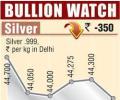
Silver followed suit and lost Rs 350 at Rs 43,950 per kg on reduced offtake by industrial units and coin makers.
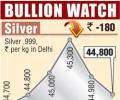
Gold in London, which normally sets price trend on the domestic front, fell by 0.1 per cent to $1,314.99 an ounce and silver by 0.3 per cent to $20.91 an ounce.

Gold demand in India is expected to be robust in 2014, likely leading to a further jump in smuggling if curbs on bullion imports remain, the World Gold Council (WGC) said.

While the gold policy covers every aspect, from sourcing gold to trading and investing in it, experts assert that the policy is incomplete if mining of gold in India isn't promoted.

Marketmen said emergence of low level buying by stockists and retailers for the wedding season amid a firm global trend mainly helped gold prices to rebound.

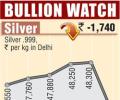
However, silver rose for the third straight session by adding Rs 375 to Rs 48,800 per kg on increased offtake by industrial units and coin makers.
Traders said stockists booking profits at prevailing higher levels following a rise of Rs 350 against sluggish demand mainly kept pressure on gold prices.

This has steered a rally in global equities and dollar Index also ticked higher, trading near its four year high.

The bullish outlook for gold is seen as a trigger for silver to perform better going ahead.

'GIFT City is now on a growth trajectory,' says Tapan Ray, MD and group CEO, GIFT City, 'The time has come for the GIFT City to take the big leap and emerge as the next financial hub of Asia.'

'Initially, Gift City was just another real estate project, but all that changed with Modi moving to New Delhi,' notes Tamal Bandyopadhyay.
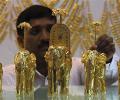
By tying gold imports directly to export volumes, India is effectively trying to cap how much bullion can be brought into the country, tightening supplies and driving up local prices.

India's gold import bill, estimated at $3 billion in May, is seen falling further this month

Realtors, consultants and foreign universities vie for big share.

'After Rajan is back in India, our resident dons are almost down. I won't say that they are out. So, now the obvious question is about Dawood, and the present government, I think, is more than willing to address that issue.' 'I think the political system made this kind of people; the corporate world made this kind of people. I have mentioned in my book that even the banks were using these outlaws to get their money back.'
 © 2026 Rediff.com - Advertise with us - Disclaimer - Privacy Policy - Sitemap - Feedback - About us - Terms of use - Grievances